Abstract
Predictive modeling with class-imbalanced data has proven to be a challenging task. This problem is well studied, but the era of big data is producing extreme levels of imbalance that are increasingly difficult to model. In addition to the modeling challenges that are associated with these highly imbalanced data sets, we have found that performance evaluation also requires careful considerations. In this talk, we demonstrate how the popular area under the receiver operating characteristic curve can provide misleading results and recommend that any evaluation of imbalanced big data also includes the area under the precision-recall curve.
Speaker bio
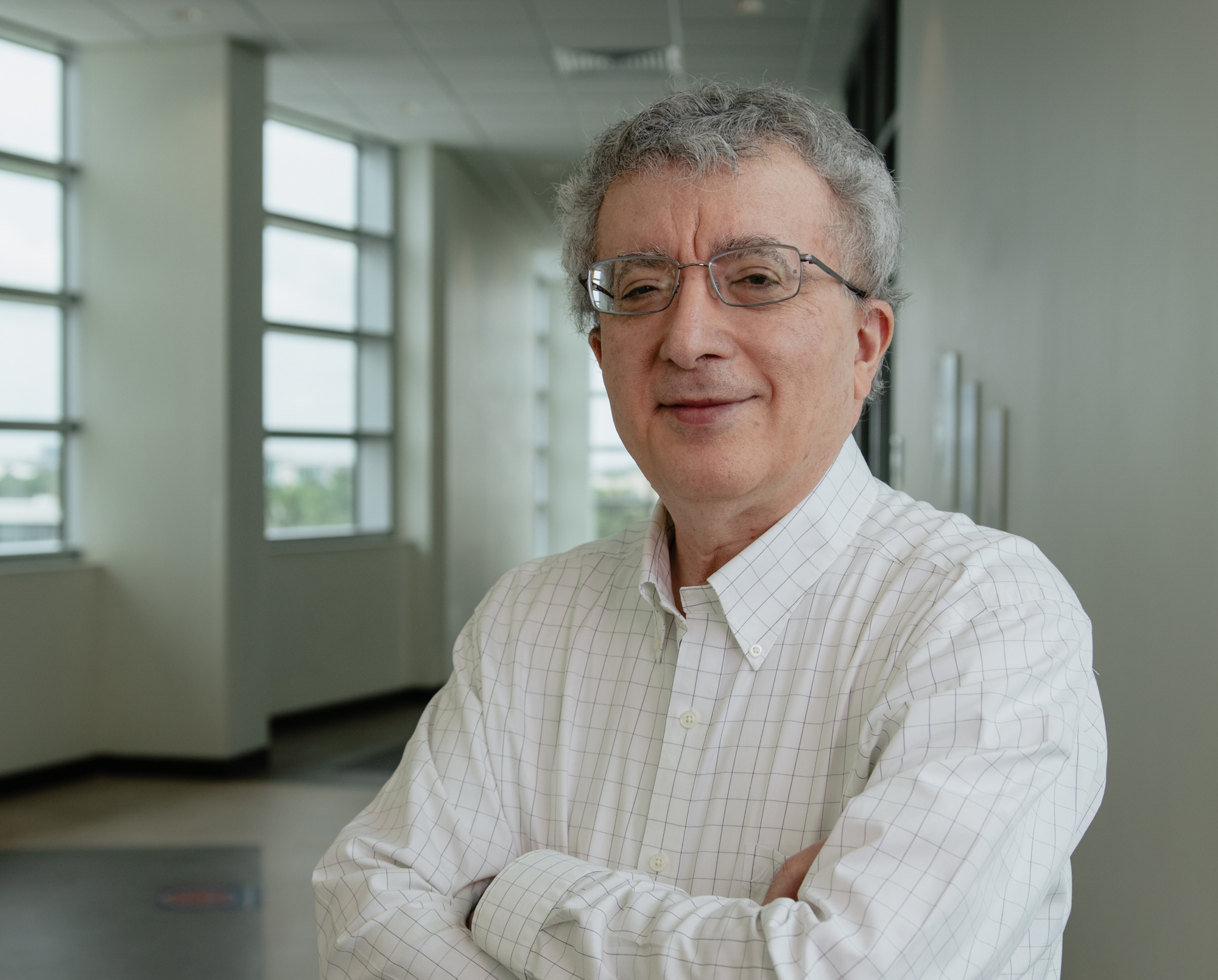
Dr. Taghi M. Khoshgoftaar is Motorola Endowed Chair Professor in the Department of Electrical Engineering and Computer Science at Florida Atlantic University and Director of the NSF Big Data Training and Research Laboratory. His research interests include big data analytics, data mining and machine learning, health informatics and bioinformatics, social network mining, security analytics, fraud detection, and software engineering. He has published more than 1,000 refereed journal and conference papers in these areas.
He is conference chair of the IEEE International Conference on Tools with Artificial Intelligence (ICTAI 2026) and Co-Editor-in-Chief of the Journal of Big Data. He has served on organizing and technical program committees of international conferences, symposia, and workshops. He has also served as North American Editor of the Software Quality Journal and on the editorial boards of Multimedia Tools and Applications, Knowledge and Information Systems, Empirical Software Engineering, Software Engineering and Knowledge Engineering, and Social Network Analysis and Mining.
Selected publications on Google Scholar
Abstract
Abstract to be announced.
Speaker bio
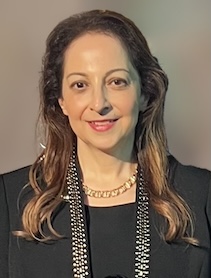
Dr. Eman El-Sheikh is a global award-winning leader with more than 30 years of experience in AI, machine learning, and cybersecurity. She serves as Associate Vice President and Professor at the University of West Florida Center for Cybersecurity and AI and as USA Ambassador for the Global Council for Responsible AI. She has received over $40 million in competitive research and education grants. Her awards include the 2026 CAE Cyber AI Community Service Award, 2026 Cyberjutsu Cyber Advocate of the Year, 2025 EC-Council Academia Innovator of the Year, 2024 GISEC Global Educator of the Year, 2025 and 2024 Cybersecurity Woman of the Year and World finalist recognition, and induction into the UWF Million Dollar Research Hall of Fame at the $25 million level.
Dr. El-Sheikh leads national initiatives including the National Cybersecurity Workforce Development Program and CyberSkills2Work®. She launched the award-winning Cybersecurity for All® Program to build skills for evolving cybersecurity roles. She has published several books and more than 115 peer-reviewed articles, and has given over 150 keynote and invited talks and presentations. She served on the NSF/NSA Cyber-AI Project leadership team that developed AI-Cyber and Secure AI programs and curriculum for US universities. She teaches and conducts research on the development, use, and evaluation of AI and machine learning for cybersecurity. She founded the Florida Women in Cybersecurity Affiliate and holds an MS and PhD in Computer Science and AI from Michigan State University.
Speaker profile
Abstract
“Hey Siri, can you measure the left ventricular ejection fraction of this patient?” Capturing the global zeitgeist, artificial intelligence (AI) still falls short of its promise in many fields. AI's ability to interactively guide and upskill a human in physical tasks is a particularly weak facet of the state of the art. Yet humans are naturally adept at guiding their peers through physical tasks. This talk focuses on bridging this gap in physically grounded AI. After defining the problem of physically grounded upskilling, I will explore three key areas: modeling human ambiguity through our “Hazy Oracles” work, modeling mistakes in physically grounded upskilling, and our state-of-the-art system for upskilling medical practitioners.
Speaker bio
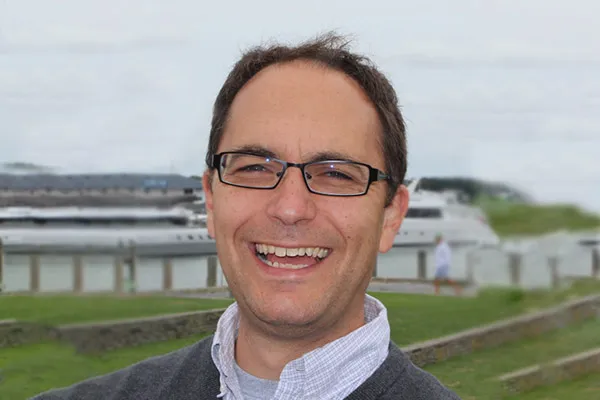
Dr. Corso is the Toyota Professor of AI with appointments in Robotics and Electrical Engineering and Computer Science at the University of Michigan, and Co-Founder and CSO of Voxel51. He received his PhD and MSE from Johns Hopkins University and his BS with honors from Loyola College in Maryland, all in Computer Science. His honors include a University of Michigan EECS Outstanding Achievement Award, Google Faculty Research Award, Army Research Office Young Investigator Award, National Science Foundation CAREER Award, SUNY Buffalo Young Investigator Award, and Link Foundation Fellowship in Advanced Simulation and Training.
He has authored more than 150 peer-reviewed papers and hundreds of thousands of lines of open-source code on topics including computer vision, robotics, data science, and general computing. He is a member of AAAI, ACM, and MAA, and a senior member of IEEE.
University of Michigan faculty profile