


Click here to View the Final Conference Program


Welcome to the IEEE ICMLA'15 Official Web Site

The 14th International Conference on Machine Learning and Applications (IEEE ICMLA'15) will be held in Miami, Florida, USA, December 9-11, 2015. http://www.icmla-conference.org/icmla15/ (sponsored by IEEE SMCS)

The aim of the conference is to bring researchers working in the areas of machine learning and applications together. The conference will cover both theoretical and experimental research results. Submission of machine learning papers describing machine learning applications in fields like medicine, biology, industry, manufacturing, security, education, virtual environments, game playing and problem solving is strongly encouraged.

Conference content will be submitted for inclusion into IEEE Xplore as well as other Abstracting and Indexing (A&I) databases.

Honorary Chair
Ram Iyengar, Florida International University, USA

General Chair:
Tao Li, Florida International University, USA

Conference Co-Chairs:
Lukasz Kurgan, University of Alberta, Canada
Vasile Palade, Coventry University, United Kingdom

Program Chairs:
Andreas Holzinger, Medical University of Graz, Austria
Randy Goebel, University of Alberta, Canada
Karin Verspoor,University of Melbourne, Australia

Proceedings Chair:
Arif Wani, California State University at Bakersfield, USA

Local Arrangement Chairs
Carlos Cabrera, Florida International University, USA
Ivana Rodriguez, Florida International University, USA

Publicity Chair
Ruogu Fang, Florida International University, USA
Qifeng Zhou, Xiamen University, China

Tutorial Chair
Leonardo Bobadilla, Florida International University, USA

Poster and Demo Chair
Dingding Wang, Florida Atlantic University, USA

Workshop and Special Session Chair
Yanfang Ye, West Virginia University, USA

Sponsorship Chair
Steve Luis, Florida International University, USA

Programm Committee


<first name, middle name, last name, organization> alphabetically ordered by last name
Special Sessions/Workshops Proposals: June 20, 2015, 11:59pm PST
Notification of Acceptance of Special Sessions/Workshops Proposals:    June 30, 2015
Tutorial proposals: July 6, 2015, 11:59pm PST
Paper Submission Deadline:
          Main Conference: August 6, 2015, 11:59pm PST (deadline extended)
          Special Sessions, Workshops: August 31, 2015, 11:59pm PST (deadline extended)
Notification of Acceptance: September 9, 2015
Registration: October 10, 2015, 11:59pm PST
Camera-ready papers: October 10, 2015, 11:59pm PST (deadline extended)
The ICMLA Conference: December 9-11, 2015

Call for papers

The 14th International Conference on Machine Learning and Applications (IEEE ICMLA'15) will be held in Miami, FL, USA, December 9 ~ December 11, 2015. http://www.icmla-conference.org/icmla15/ (sponsored by IEEE SMCS)

ICMLA 2015 aims to bring together researchers and practitioners to present their latest achievements and innovations in the area of machine learning (ML). The conference provides a leading international forum for the dissemination of original research in ML, with emphasis on applications as well as novel algorithms and systems. Following the success of previous ICMLA conferences, the conference aims to attract researchers and application developers from a wide range of ML related areas, and the recent emergence of Big Data processing brings an urgent need for machine learning to address these new challenges. The conference will cover both machine learning theoretical research and its applications. Contributions describing machine learning techniques applied to real-world problems and interdisciplinary research involving machine learning, in fields like medicine, biology, industry, manufacturing, security, education, virtual environments, games, are especially encouraged.

Contributions describing applications of machine learning (ML) techniques to real-world problems, interdisciplinary research involving machine learning, experimental and/or theoretical studies yielding new insights into the design of ML systems, and papers describing development of new analytical frameworks that advance practical machine learning methods are especially encouraged.

The technical program will consist of, but is not limited to, the following topics of interest:

  • statistical learning
  • neural network learning
  • learning through fuzzy logic
  • learning through evolution (evolutionary algorithms)
  • reinforcement learning
  • multi-strategy learning
  • cooperative learning
  • planning and learning
  • multi-agent learning
  • online and incremental learning
  • scalability of learning algorithms
  • inductive learning
  • inductive logic programming
  • Bayesian networks
  • support vector machines
  • case-based reasoning
  • machine learning for bioinformatics and computational biology
  • machine learning and natural language processing
  • multi-lingual knowledge acquisition and representation
  • grammatical inference
  • knowledge acquisition and learning
  • knowledge discovery in databases
  • knowledge intensive learning
  • knowledge representation and reasoning
  • machine learning and information retrieval
  • machine learning for web navigation and mining
  • learning through mobile data mining
  • text and multimedia mining through machine learning
  • distributed and parallel learning algorithms and applications
  • feature extraction and classification
  • theories and models for plausible reasoning
  • computational learning theory
  • cognitive modeling
  • hybrid learning algorithms

Applications of machine learning in:

  • medicine, health, bioinformatics and systems biology
  • industrial and engineering applications
  • security applications
  • smart cities
  • game playing and problem solving
  • intelligent virtual environments
  • economics, business and forecasting applications, etc.

The conference will include a number of interesting keynote plenary talks, which will be announced on the conference web site as arrangements are finalized. Previous invited speakers included numerous fellows of IEEE, AMIA, AAAS, AAAI, etc.

Paper Submission

High quality papers in all Machine Learning areas are solicited. Papers that present new directions in ML will receive careful reviews. Authors are expected to ensure that their final manuscripts are original and are not appearing in other publications. Paper should be limited to 6 pages and submitted in IEEE format (double column). Papers will be reviewed by the Program Committee on the basis of technical quality, originality, significance and clarity. All submissions will be handled electronically. Accepted papers will be published in the conference proceedings, as a hardcopy. Authors of the accepted papers need to present their papers at the conference. A selected number of accepted papers will be invited for possible inclusion, in an expanded and revised form, in some journal special issues.

ICMLA'15 Best Paper Award and ICMLA'15 Best Poster Award will be conferred at the conference to the authors of the best research paper and best poster presentation, respectively, based on the reviewers and Programme Committee recommendations.

Detailed instructions for submitting papers can be found at How to Submit

Important Date

Special Sessions/Workshops Proposals: June 20, 2015, 11:59pm PST
Tutorial proposals: July 6, 2015, 11:59pm PST
Paper Submission Deadline:
          Main Conference: August 6, 2015, 11:59pm PST (deadline extended)
          Special Sessions, Workshops & ICMLA Challenge: August 31, 2015, 11:59pm PST (deadline extended)
Notification of Acceptance: September 9, 2015
Camera-ready papers & Pre-registration: October 10, 2015, 11:59pm PST (deadline extended)
The ICMLA Conference: December 9-11, 2015

For information related to technical content, please contact Program Co-Chairs:

CALL FOR Proposals for Special Sessions, Workshops and Tutorials

The 14th IEEE International Conference on Machine Learning and Applications (IEEE ICMLA 2015) Miami - USA, 9-11 December 2015 (sponsored by IEEE SMCS)

We invite submission of proposals for special sessions, workshops and tutorials. Special sessions and workshops can be from half to 3 days long. Proposals should include the following information:

  • name and address of the proposer(s)
  • title of the session/workshop/tutorial
  • a description of the session/workshop/tutorial including the scope and aims of the session/workshop/tutorial, a short bio of the organizer(s), preliminary technical committee members.

Each special session/workshop will have at least five paper presentations. Special session/workshop chairs will be responsible for soliciting the papers, organizing the reviews, and making final decisions in consultation with the conference chairs.

Special session/workshop proposals or Tutorial proposals can be submitted to
Special Sessions and Workshops chair

OR Conference Co-Chairs

Important Date

Special Sessions/Workshops Proposals: June 20, 2015, 11:59pm PST
Tutorial proposals: July 6, 2015

CALL FOR Posters and Demonstrations

Posters

Poster presentations provide researchers with a unique opportunity to present and to receive direct feedback from an expert audience about significant work in progress, bleeding-edge work, or research that is best communicated in an interactive or graphical fashion. We encourage submissions of high quality posters on all topics in the general areas of machine learning and its applications. A full list of current topics of interest, but not limited to, can be found in the ICMLA general Call for Papers.

Industry authors are also invited to submit posters describing solutions in the domains addressed by this conference, focusing on the technical aspects of their work. The submission procedure for industrial papers is the same as for research papers.

Note that: All extended abstracts for posters will be reviewed and published in the IEEE ICMLA proceedings, which will be distributed in CD-ROM at the conference. Submissions of extended abstracts for posters must be in English and should not exceed 4 pages in IEEE ICMLA Proceedings format including references and figures.

Demonstrations

ICMLA 2015 encourages submissions of demonstrations on all topics in the general areas of machine learning applications (including databases, information retrieval, and knowledge management), especially demonstrations bridging these areas, or presenting new perspectives in these areas.

Demonstration papers cannot exceed 3 pages in length and should feature an interactive system preview. Submissions should describe system components, implementation techniques, and contributions as well as interactive demonstration plan. They should also highlight either practical lessons or new innovative applications. Special emphasis will be placed on multidisciplinary applications that bridge these areas. Selection criteria will include the originality of the application identified, the readiness of the system for interactive demonstration, the novelty of practical insights, and the multidisciplinary nature of the submission. We especially encourage submissions from both academia and industry. To enable reviewers to verify the nature of the demonstration, the submissions should either include URLs for the web sites of the systems or a URL to a 2-3 minute video demonstrating the system. The review process for demonstration submission is NOT double-blind.

Important Date

Poster and Demo Submision Deadline: August 6, 2015, 11:59pm PST
Notification of acceptance: September 9, 2015
Camera-ready papers & Pre-registration: October 10, 2015, 11:59pm PST (deadline extended)
The ICMLA Conference: December 9-11, 2015

For information related to technical content, please contact:

Program Co-Chairs

Poster and Demo chair

The paper submission for the main conference, special sessions, workshops and challenges is done through the CMT (Microsoft's Academic Conference Management Service). You must create an account with CMT in order to submit your paper. If you already have an account, please reuse the same account.

Papers submitted for reviewing should conform to IEEE specifications. Manuscript templates can be downloaded from IEEE website. The maximum length of papers is 6 pages.

Papers from the main conference, special sessions and workshops will be divided into two categories:

Oral presentation papers can be up to 6 pages long and poster papers can be up to 4 pages long. Authors of oral papers can add up to 2 extra pages to make it up to 8 pages long, but they will need to pay extra publication charges of $50 per page, similarly authors of poster papers can add upto 2 extra pages to make it upto 6 pages long, but they will need to pay extra publication charges of $50 per page.

References and any other additional material must be included in this number of pages.

All the papers will go through an anonymous peer review. The reviewers will know the names of the authors.

The instruction for submitting the Author's Final Paper (Camera Ready) for the 2015 14th International Conference on Machine Learning and Applications (ICMLA 2015) can be accessed from Online Author Kit.


Conference Venue

Pullman Hotel
(previously called Sofitel Miami Luxury Hotel)

Address

5800 Blue Lagoon Dr, Miami, FL 33126

Price

$145

Reservation

Online Reservation Link

Terms and Conditions

Contacts

Phone: (305)264-4888


Page length

Fees:

US Visa:

To obtain an invitation letter for the conference you must first pay the registration and have a copy of the PDF receipt (available at the registration site). Then you must contact the conference general chair Tao Li (taoli@cs.fiu.edu) and ask for an invitation letter including in your email:

  1. Your correct name;
  2. You paper ID and paper title;
  3. The session and type of acceptance (paper, poster);
  4. A copy of the PDF receipt for payment.

Payment by Bank Transfer:

In bank transfer as well, authors will be able to save pdf receipt online. However, bank transfer (inspite of being a wire transfer) takes a few days. Once it is verified that the payment has been received by the bank, the payment part on the registration system will be completed. This is how bank transfer works:

Special Sessions


Workshops


Following are accepted articles of 14th IEEE International Conference on Machine Learning and Applications (ICMLA 2015)

Accepted oral presentation

ID Title Primary Contact Author
102 Using Machine Learning to Understand and Mitigate Model Form Uncertainty in Turbulence Models Ling, Julia
111 Gaussian Mixture Model Cluster Forest Janousek, Jan
116 Adaptive Fuzzy Prediction for Automotive Applications Usage QIU, SHIQI
117 A Hybrid Sequential Sampling based Metamodeling Approach for High Dimensional Problems Ulaganathan, Selvakumar
119 A Finite Gamma Mixture Model‐Based Discriminative Learning Frameworks Bouguila, Nizar
123 Decaying Potential Fields Neural Network: An Approach for Parallelizing Topologically Indicative Mapping Exemplars Valova, Iren
124 An Edge‐Less Approach to Horizon Line Detection AHMAD, TOUQEER
125 Classification of Evolving Data Streams with Infinitely Delayed Labels Souza, Vinicius
126 Automatic Topic Labeling using Ontology‐based Topic Models Allahyari, Mehdi
127 Optimally Generalized Learning Vector Quantization (OGLVQ) Temel, Turgay
133 A code‐centric cluster‐based approach for searching online support forums for programmers Scaffidi, Christopher
134 Sequence Classification with Neural Conditional Random Fields Abramson, Myriam
137 Evaluating the uncertainty of a Bayesian network query response by using joint probability distribution SHAO, Yang
139 Sparse Temporal Difference Learning via Alternating Direction Method of Multipliers Tsipinakis, Nikos
147 Feature Selection Using Gustafson‐Kessel Fuzzy Algorithm in High Dimension Data Clustering Gueorguieva, Natacha
149 A Bilevel Parameter Tuning Strategy of Partially Connected ANNs Moradi Kordmahalleh, Mina
150 Complex Decomposition of the Negative Distance Kernel Vor der Brück, Tim
154 Scalable Learning of Entity and Predicate Embeddings for Knowledge Graph Completion Minervini, Pasquale
155 Recognizing Human Activities from Raw Accelerometer Data Using Deep Neural Networks Luo, Dingsheng
157 Learning Common Metrics for Homogeneous Tasks in Traffic Flow Prediction Hong, Haikun
158 Nonparametric Bayesian Modeling for Automated Database Schema Matching Ferragut, Erik
159 Learning Convex Piecewise Linear Machine for Data‐driving Optimal Control Zhou, Yuxun
164 Detecting Erosion Events in Earth Dam and Levee Passive Seismic Data with Clustering Belcher, Wendy
165 Using consumer behavior data to reduce energy consumption in smart homes Zanatta, Danilo
169 Comparative evaluation of top‐N recommenders in e‐commerce: industrial perspective Paraschakis, Dimitris
170 Investigating Eating Behaviours using Topic Models White, Ruth
172 Car Following Markov Regime Classification and Calibration Zaky, Ahmed
175 Statistical Learning via Manifold Learning Bernstein, Alexander
176 Multi‐label Classification of Anemia Patients Bellinger, Colin
177 Synthetic Oversampling for Advanced Radioactive Threat Detection Bellinger, Colin
179 Medical Image Classification via SVM using LBP Features from Saliency‐Based Folded Data Tizhoosh, Hamid R
180 MLaaS: Machine Learning as a Service Grolinger, Katarina
186 Evaluating Real‐time Anomaly Detection Algorithms – the Numenta Anomaly Benchmark Lavin, Alexander
190 Donor Selection for Hematopoietic Stem Cell Transplant using Cost‐Sensitive SVM Sivasankaran, Adarsh
192 Predictable Feature Analysis Richthofer, Stefan
193 Measuring Level‐K Reasoning, Satisficing, and Human Error in Game‐Play Data Biswas, Tamal
194 A Power Variance Test for Nonstationarity in Complex‐Valued Signals Sykulski, Adam
197 Coordinate Descent Fuzzy Twin Support Vector Machine for classification Wang, Jianjun
198 Classification of Occluded Objects using Fast Recurrent Processing Yilmaz, Ozgur
199 Short Text Opinion Detection using Ensemble of Classifiers and Semantic Indexing Lochter, Johannes
202 Zero Shot Deep Learning from Semantic Attributes Wang, I‐Jeng
203 A Family of Chisini Mean Based Jensen‐Shannon Divergence Kernels Sharma, Piyush
207 Self‐Configuring and Evolving Fuzzy Image Thresholding Tizhoosh, Hamid R
210 Speaker Adaptation Using Speaker Similarity Score on DNN Features Rizwan, Muhammad
213 A proposal of a methodological framework with experimental guidelines to investigate clustering stability on financial time series MARTI, Gautier
218 Speaker Identification In Medical Simulation Data Using Fisher Vector Representation Frigui, Hichem
221 Performance Analysis of Majority Vote Combiner for Multiple Classifier Systems Hassan, Mohammed
227 A Machine Learning Approach to False Alarm Detection for Critical Arrhythmias Wang, Xing
231 Robust Vehicle Tracking Using Perceptual Hashing Algorithm Chen, Long
235 Simplicity of Kmeans versus Deepness of Deep Learning: A Case of Unsupervised Feature Learning with Limited Data Dundar, Murat
244 The Influence of Sample Reconstruction on Stock Trend Prediction via NARX Neural Network Wei, Yi
247 Statistical Fault Localization based on Importance Sampling Siami‐Namin, Akbar
253 Learning Multi‐Valued Biological Models with Delayed Influence from Time‐Series Observations Ribeiro, Tony
255 Learning Complex Events from Sequences with Informed Gaps Gay, Pablo
256 The Effect of Dataset Size on Training Tweet Sentiment Classifiers Khoshgoftaar, Taghi
260 Integrating Active Learning with Supervision for Crowdsourcing Generalization Sheng, Victor S
261 Topic novelty Detection Using Infinite Variational Inverted Dirichlet Mixture Models Bouguila, Nizar
267 Measuring and Modelling Delays in Robot Manipulators for Temporally Precise Control using Machine Learning Andersen, Thomas
270 Online One‐class SVMs with Active‐set Optimization for Data Streams Gao, Katelyn
274 NewsCubeSum: A Personalized Multidimensional News Update Summarization System Wang, Dingding
281 Transfer Learning of Air Combat Behavior Toubman, Armon
282 Example‐Specific Density based Matching Kernels for Scene Classification using Support Vector Machines A D, Dileep
296 Metabolic profiling of 1H NMR spectra in Chronic Kidney Disease with local predictive modeling Luck, Margaux
299 Online Learning Algorithm for Collective LDA Chen, Xiaoyu
300 Detecting Credit Card Fraud using Periodic Features Correa Bahnsen, Alejandro
303 Incermental Learning on Decorrelated Approximators Schoenke, Jan Henrdik
313 Active Information Retrieval for Linking Twitter Posts with Political Debates Makki Niri, Raheleh
316 Acoustic Features For Recognizing Musical Artist Influence Morton, Brandon
321 Frequent Set Mining for Streaming Mixed and Large Data Khade, Rohan
332 Predicting Churn Of Expert Respondents In Social Networks Using Data Mining Techniques Adaji, Ifeoma
334 Intelligent Bus Stop Identification Using Smartphone Sensors Kalpakis, Konstantinos
341 Augmenting Interactive Evolution with Multi‐Objective Optimization Woolley, Brian
352 A Demonstration of Stability‐Plasticity Imbalance in Multi‐Agent, Decomposition‐Based Learning Mondesire, Sean
356 A Highly Distributable Computational Framework for Fast Cloud Data Retrieval Basirat, Amir
357 Resampling‐based variable selection with lasso for partially linear models Mares, Mihaela
359 Adaptive OpenMP Task Scheduling Using Runtime APIs and Machine Learning Qawasmeh, Ahmad
369 Source‐aware Partitioning for Robust Cross‐validation Uysal, Ismail
273 An Investigation of the Use of Complexity Measures in the Similarity Search Process Adopted by kNN Algorithm for Time Series Prediction Parmezan, Antonio
375 Fine‐Grained Opinion Extraction from Text Documents Mojica de la Vega, Luis
383 Efficient and Rotation Invariant Fingerprint Matching Algorithm Using Adjustment Factor Gerardo Khan, Asif

Accepted poster presentation

ID Title Primary Contact Author
173 Parallelization of Minimum Probability Flow on Binary Markov Random Fields Shu, Rui
183 Automatically Discovering Fatigue Patterns from Sparsely Labelled Temporal Data Guo, Karen
187 Increasing Grid Flexibility Through Improved Electricity Demand Prediction in Nicaragua Suffian, Stephen
189 On Personalized Prediction Models of Human Motion Using Smart Phone Data Levy, Ariel
217 Patient Identification for Telehealth Programs Ganser, Martha
237 Density Based Clustering of Static Functional Connectivity Features Obtained from Functional Magnetic Resonance Imaging Data Rangaprakash, D
251 Layer‐Specific Adaptive Learning Rates for Deep Networks Singh, Bharat
259 Model Shrinking for Embedded Keyword Spotting Sun, Ming
280 Bandits meet computer architecture Designing smartly allocated cache Glassner, Yonatan
291 Vibration Learning and Control Towards Vibration Actuated Robotic Systems Joe, Woong Yeol
306 Nearest Neighbor Minutia Quadruplets based Fingerprint Matching with Reduced Time and Space Complexity Avula, Tirupathi Rao
317 Hidden Markov Support Vector Machines for Self‐Paced Brain Computer Interfaces Bashashati, Hossein
324 Linear KernelPCA and K‐means Clustering Using True Eigenvectors of Covariance Matrice ELHADJI ILLE GADO, Nassara
337 Dynamic Music Emotion Recognition via Recurrent Neural Networks Caro, Michael
351 Active Learning for One‐Class Classification Barnabé‐Lortie, Vincent
360 A Generic Platform to Automate Legal Knowledge Work Process using Machine Learning K M, Annervaz
363 Application of a Multilayer Perceptron Neural Network for Classifying Software Platforms of a Powered Prosthesis Through a Force PlateLeMoyne, Robert LeMoyne, Robert
365 Ankle Rehabilitation System with Feedback from a Smartphone Wireless Gyroscope Platform and Machine Learning Classification LeMoyne, Robert
366 Lambda‐Consensus Clustering Heisterkamp, Douglas
371 An Application of Neural Networks to Predicting Mastery of Learning Outcomes in the Treatment of Autism Spectrum Disorder Linstead, Erik
387 Anomalies detection in smart‐home activities Fahad, Labiba
392 Vertical Approximate Convex Hull Algorithm for Data Classification G Roy, Arjun
103 An automatic recognition for the Auditory Brainstem Response waveform Uragun, Balemir
105 Eye State Prediction from EEG Data Using Boosted Rotational Forests Hamilton, Cameron
113 Data‐Based Statistical Models of Data Networks Bernstein, Alexander
122 Scrubbing The Web For Association Rules, An Application In Predictive Text Valova, Iren
128 A Single‐step Clustering Algorithm based on an Information‐theoretic Ambiguity Metric Temel, Turgay
135 Restricted Boltzmann machine for nonlinear system modeling Yu, Wen
136 USING VECTOR QUANTIZATION OF HOUGH TRANSFORM FOR CIRCLE DETECTION Zhou, Bing
140 Human Action Recognition using Accelerated Variational Learning of Infinite Dirichlet Mixture Models Bouguila, Nizar
142 A Multiscale Spectral Method for Learning Number of Clusters Little, Anna
143 Predictive Models for Differentiation between Normal and Abnormal EEG through Cross‐Correlation and Machine Learning Techniques Oliva, Jefferson
144 Learning from Synthetic Data Using a Stacked Multichannel Autoencoder Zhang, Xi
146 Analyzing the Gender Wage Gap in Ontario's Public Sector Antonie, Luiza
162 Accurate Fault Classification in Series Compensated Multi‐Terminal Extra High Voltage Transmission Line using Probabilistic Neural NetwRAVAL, PRANAV Camelo Soares, Jefferson
163 A Data Mining Approach to Anticipate and Analyze Canceled Contracts on Private Health Systems Johansson, Ulf
166 Mining Trackman Golf Data Markov, Zdravko
171 MDL‐Based Hierarchical Clustering Gallagher, Claire
178 A Bayesian Classification Approach to Improving Performance for a Real‐World Sales Forecasting Application 181 Demographic Group Classification of Smart Device Users Alharbi, Adel
182 Data‐driven Kernels via Semi‐Supervised Clustering on the Manifold Ventura, Dan
184 An Empirical Study on Structured Dichotomies in Music Genre Classification Arjannikov, Tom
191 Real‐Time American Sign Language Recognation Using Surface ENG Signal SAVUR, Celal
205 Path for Kernel Adaptive One‐Class Support Vector Machine Beauseroy, Pierre
211 Predicting energy demand peak using M5 model trees Grolinger, Katarina
216 Differentiation between Normal and Epileptic EEG using K‐Nearest‐Neighbor Technique Oliva, Jefferson
225 Mining Clusters in XML Corpora based on Bayesian Generative Topic Modeling Costa, Gianni
226 A k‐Nearest Neighbor‐based Approach for Improving Change Detection Classifiers in Aerial Images Touazi, Azzedine
228 Predicting New Friendships In Social Networks Nanduri, Anvardh
234 Does the Inclusion of Data Sampling Improve the Performance of Boosting Algorithms on Imbalanced Bioinformatics Data? Khoshgoftaar, Taghi
236 Utilizing Ensemble, Data Sampling and Feature Selection Techniques for Improving Classification Performance on Tweet Sentiment Data Khoshgoftaar, Taghi
238 Predicting Vulnerable Software Components through N‐gram Analysis and Statistical Feature Selection Xue, Xiaozhen
241 Similarity of Feature Subset Selection Methods on Software Metrics Data Khoshgoftaar, Taghi
242 A Non‐parametric Hidden Markov Clustering Model with Applications to Time Varying User Activity Analysis Wei, Wutao
246 SkILL ‐ a Stochastic Inductive Logic Learner Côrte‐Real, Joana
250 RPC: an efficient classifier ensemble using random projections Gondara, Lovedeep
254 Wineinformatics: Uncork Napa’s Cabernet Sauvignon by Association Rule Based Classificaiton Chen, Bernard
257 A Support Vector Classification Model with Partial Empirical Risks Given Luo, Linkai
263 Towards Hyper Parameter Free Graph‐based Semi‐Supervised Learning Classifier Yoshiyama, Kazuki
264 Unsupervised Learning and Image Classification in High Performance Computing Cluster Chen, Xuewen
271 Deep Neural Networks with Parallel Autoencoders for Learning Pairwise Relations: Handwritten Digits Subtraction Liao, Li
277 Constrained Projective Non‐negative Matrix Factorization for Semi‐supervised Multi‐label Learning Yang, Xuejun
279 ABC‐Sampling for balancing imbalanced datasets based on Artificial Bee Colony algorithm Braytee, Ali
289 State Tracking of Composite Delaminations with a Bayesian Filter Gregory, Elizabeth
292 Local Coordinate Projective Non‐negative Matrix Factorization Liao, Qing
293 EEG‐Based Secondary Task Detection in a Multiple Objective Operational Environment Giametta, Joseph
295 Population Migration Using Dominance in Multi‐Population Cultural Algorithm Upadhyayula, Santosh
297 Prediction of Users’ Response Time in Q&A Communties Burlutskiy, Nikolay
301 Weakly Supervised Learning of Dialogue Structure in MOOC Forum Threads Fisher, Robert
304 Sequential Covariance‐Matrix Estimation with Application to Mitigating Catastrophic Forgetting Goodrich, Benjamin
310 A Model of Local Binary Pattern Feature Descriptor for Valence Facial Expression Classification Yan, Jie
311 Failure Analysis of Three‐Phase Induction Motors using Information Measures and Artificial Neural Networks Scalassara, Paulo
312 VISAGE: A Support Vector Machine Approach to Group Dynamic Analysis Ravichander, Abhilasha
315 Extracting Topical Information of Tweets Using Hashtags Zengin Alp, Zeynep
318 On Asymmetric Similarity Search Garg, Ankita
320 Deep Neural Networks: A Case Study for Music Genre Classification Aryafar, Kamelia
323 Deep Learning Using Multiple Kernel Method Rebai, Ilyes
329 WNN‐Based Fast Event Pattern Detection and Prediction Using Reversed Pattern Tree for Cloud System Reliability Management Wu, Zhengping
330 Boosting with Adaptive Sampling for Multi‐class Classification Chen, Jianhua
335 Solving the Academic Timetable Problem Thinking on Student Needs Almeida, Maria Weslane
338 Multiple Imputation of Missing Data for Diagnosing Sensor Faults in a Wind Turbine Mohammadi Nejad, Eman
340 Semi Supervised Learning for Human Activity Recognition using Depth Cameras Fathy, Moustafa
342 Thompson Sampling Guided Stochastic Searching on the Line for Non‐stationary Adversarial Learning Glimsdal, Sondre
346 Learning from the Crowd with Neural Network Sheng, Victor S
347 Class Discovery via Bimodal Feature Selection in Unsupervised Settings Curtis, Jessica
348 Learning Context‐based Outcomes for Mobile Robots in Unstructured Indoor Environments Fisher, Robert
355 An Asynchronous Implementation of the Limited Memory CMA‐ES Buzdalov, Maxim
362 Multi‐level Resolution Features for Classification of Transportation Trajectories Ellen, Jeffrey
364 Study of how the Integration of Artificial Neural Network and Genetic Algorithm Should be Made for Modeling Meteorological Data Ventura, Thiago
370 Multi‐Query Optimization in Federated Databases using Evolutionary Algorithm Mansha, Sameen
376 Probabilistic Graphical Models and Deep Belief Networks for Prognosis of Breast Cancer Khademi, Mahmoud
385 A Hybrid Method for Link Prediction in Social Networks SAOUSSEN, AOUAY
388 Inertia Based Recognition of Daily Activities with ANNs and Spectrotemporal Features Kılınç, Ismail
389 Cancer Detection using Co‐Training of SNP/Gene/MiRNA Expressions Classifiers Mohamed, Reham
390 Regularized Supervised Topic Model for Continuous Emotion Analysis Lade, Prasanth


Avoiding Fusion of Illusion and Confusion by Data Mining
Igor Jurisika
University of Toronto, Canada

Abstract: Cancer development is a multi-step process that leads to uncontrolled tumor cell growth. Multiple signaling cascades are involved, some are activated while other pathways are suppressed. To fathom these processes, biomedical researchers use models of biological systems to integrate diverse types of information. This ranges from multiple high-throughput datasets and functional annotations to expert knowledge about biochemical reactions and biological pathways. Such integrative systems are used to develop new hypotheses, and answer complex questions in precision medicine such as what factors cause disease; which patients are at high risk; will patients respond to a given treatment; how to rationally select a combination therapy to individual patient, etc. Precision medicine needs to be data-driven, and corresponding analyses comprehensive and systematic. We will not find new treatments if only testing known targets and studying characterized pathways. Thousands of potentially important proteins remain poorly characterized. Computational biology methods, including machine learning, data mining and visualization, can help fill this gap with accurate predictions, making disease modeling more comprehensive. Intertwining computational prediction and modeling with biological experiments will lead to more useful findings faster and more economically. These computational predictions already significantly improved human interactome coverage relevant to both basic and cancer biology, and importantly, helped us to identify, validate and characterize prognostic signatures, and identify potential novel treatments. Combined, these results may lead to unraveling mechanism_of_action for therapeutics, re-positioning existing drugs for novel use and, prioritizing multiple candidates based on predicted toxicity, identifying groups of patients that may benefit from treatment and those where a given drug would be ineffective.

Bio:Igor Jurisica is Tier I Canada Research Chair in Integrative Cancer Informatics, Senior Scientist at Princess Margaret Cancer Centre, Prof at U Toronto and Visiting Scientist at IBM CAS. He is also an Adjunct Prof at the School of Computing and Pathology & Molecular Medicine at Queen's U, Computer Science at York U, and an Honorary Professor at Shanghai Jiao Tong University. Since 2015, he has also served as Chief Scientist at the Creative Destruction Lab, Rotman School of Management. His research focuses on integrative computational biology and the representation, analysis and visualization of high-dimensional data to identify prognostic and predictive signatures, drug mechanism_of_action and in-silico repurposing of drugs. Interests include prediction and analysis of protein interactions networks, modeling signaling cascades and high-throughput protein crystallography. He has published extensively on data mining, visualization and cancer informatics, including multiple papers in Science, Nature, Nature Medicine, Nature Methods, J Clinical Oncology, and has over 8,806 citations since 2010. He has been included in Thomson Reuters 2015 & 2014 list of Highly Cited Researchers, and The World's Most Influential Scientific Minds: 2014 Report.


Predictive Analytics in Complex Dynamic Networks
Zoran Obradovic
Temple University, USA

Abstract: Predictive modeling in complex networks is a challenging problem due to partially observed node attributes and links that often evolve over time. Additional challenges involve presence of multiple types of links among nodes that should be considered jointly where various nodes have different temporal dynamics. In this talk we will present an overview of the results of our ongoing big data project aimed to address some of these challenges by developing effective methods for structured regression with propagating uncertainty in evolving networks. The proposed methods will be discussed in context of applications to predicting admission and mortality rate for high impact diseases at a large number of hospitals.

Bio: Zoran Obradovic is an elected member of the Academia Europaea (the Academy of Europe), a L.H. Carnell Professor of Data Analytics at Temple University, Professor in the Department of Computer and Information Sciences with a secondary appointment in Statistics, and is the Director of the Data Analytics and Biomedical Informatics Center. He is the executive editor at the journal on Statistical Analysis and Data Mining, which is the official publication of the American Statistical Association and is an editorial board member at eleven journals. He is the chair at the SIAM Activity Group on Data Mining and Analytics and was co-chair for 2013 and 2014 SIAM International Conference on Data Mining and was the program or track chair at many data mining and biomedical informatics conferences. His work is published in more than 300 articles and is cited more than 15,000 times (H-index 48). For more details see http://www.dabi.temple.edu/~zoran/
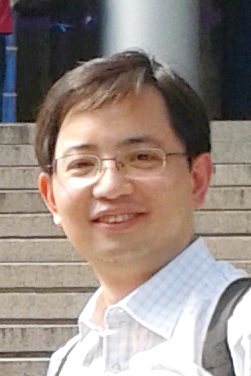


Big Data Incremental Learning
Zhi-Hua Zhou
Nanjing University, China

Abstract: Traditional learning approaches usually try to collect all available data and then train a model. This becomes more and more infeasible in big data applications. Many popular loss functions in machine learning are non-linear, non-smooth and non-convex, leading to difficult optimization problems. With big data, the optimization becomes even more challenging because of the concerns of computational, storage, communication costs, etc., and it is desired to do incremental learning, without accessing the whole data. In this talk we will introduce some studies along this direction.

Bio: Zhi-Hua Zhou is a Professor and Founding Director of the LAMDA Group at Nanjing University. He authored the book "Ensemble Methods: Foundations and Algorithms", and published more than 100 papers in top-tier journals and conference proceedings. His work have received more than 18,000 citations, with a h-index of 66. He also holds 14 patents and has good experiences in industrial applications. He has received various awards, including the National Natural Science Award of China, the IEEE CIS Outstanding Early Career Award, the Microsoft Professorship Award, etc. He serves as the Executive Editor-in-Chief of Frontiers of Computer Science, Associate Editor-in-Chief of Science China, and on editorial boards for twelve journals. He is the founder of ACML (Asian Conference on Machine Learning) and chair of various conferences including the IJCAI 2015 machine learning track chair and ICDM 2015 Program chair. He is an ACM Distinguished Scientist, IEEE Fellow, IAPR Fellow and CCF Fellow.



Conference Programme: click here

Sponsors:

IEEE SMC:

Association for Machine Learning and Application:

IEEE SMC Technical Committee on Machine Learning:


Florida International University:

School of Computing and Information Science, Florida International University:

Nanjing University of Posts and Communications:

Nanjing University of Science and Technology: